
1. Introduction
Feeding your dog is more than simply filling a bowl—it impacts their health, energy, growth, and longevity. If there is no nutritional balance, digestion problems, joint pains, and sometimes even life-threatening diseases can occur.
2. Nutritional Building Blocks/Nutritious food
🥩 Protein
- Dogs need high-quality proteins like (meets all essential amino acids): chicken, beef, fish, eggs. Puppies: ~22–32%, adults: ~18–25% protein more feeding advice.
- If there is no good protein, growth retardation can occur.
🧈 Fats & Omegas
- Provide energy, coat health, absorb fat-soluble vitamins (A, D, E, K) read more….
- Sources: fish oil, chicken fat, flaxseed oil. Honey makes the skin soft and glowing.
🌾 Carbohydrates & Fiber
- Carbs (Carbohydrates) give energy; fiber supports digestion. Sources: brown rice, oats, sweet potato, pumpkin etc.
🧪 Vitamins & Minerals
- Essential nutrients: Ca, P, K, Na, Mg, Fe, Zn, B-complex, Vit E. Ensure AAFCO standards .
💧 Water
- Provide fresh water always. quantity: Aim ~1 oz per lb (≈30 ml per kg) daily .
- Hydration is key—low water leads to kidney/digestion issues.
3. Feeding Schedule
Puppies feeding
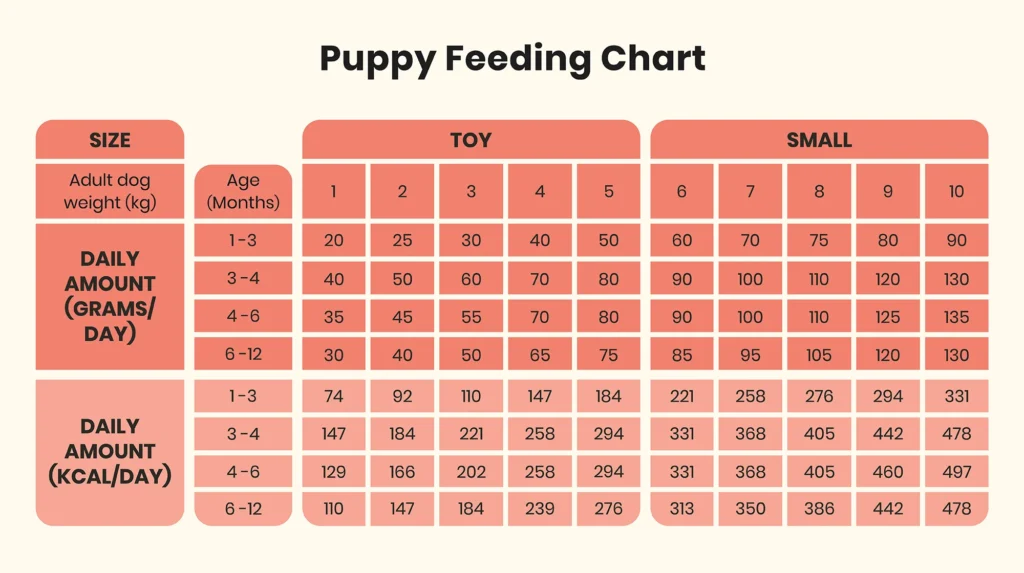
- 6–12 weeks: 4 meals/day
- 3–6 months: 3 meals/day
- 6–12 months: reduce to 2 meals/day
- Babies need to be fed at regular intervals.
Adult Dogs feeding
- 1–2 meals/day preferred
- Early morning & evening with some gap (10–12 hours).
Seniors or Special Needs
- Senior dogs benefit from 1–2 small meals; low-calorie, high-protein, added fiber, glucosamine & omega‑3
- Pregnant/lactating females require 15–25% more calories(food) with high protein.
4. Portion Control & Caloric Needs
- Use formula: 30 × weight(kg) + 70 = kcal/day
- Adjust for activity: Lap dogs ~90%; active dogs +20–40% .
- Weight & body condition (ribs slightly visible) must check regularly to adjust.
Treats
- Should be ≤10% of daily calories; prefer low-fat, nutrient-rich treats like carrot, apple, pumpkin. Avoid xylitol & seeds
5. Unsafe Foods to Avoid 🚫
- Chocolate, grapes, raisins, onion, garlic, xylitol, avocado, macadamia nuts, caffeine, alcohol, cooked bones.
- Some of these foods can lead to constipation and bloating – always keep the dog away.
6. Reading Labels / Product Selection
- Look for AAFCO ‘complete & balanced’ statement more advice...
- High-quality ingredients listed first; named protein vs vague terms
- Dry-matter basis: 18–30% protein, 10–20% fat, fiber <5%, Ca:P ~1:1 .
- Avoid artificial colours/preservatives.
7. Special Diets / Variants
Commercial vs Homemade
- Commercial: Convenient, quality varies; choose based on vet advice
- Homemade: must follow vet-formulated recipes that meet nutritional needs read more...
Raw / BARF
- Offers benefits (coat, digestion), but hygiene and balanced nutrients are critical—requires caution
Vegetarian/Vegan
- Possible but requires full supplementation (taurine, B12); vet formulation essential .
Senior Diet
- High protein (~2.5 g/kg), added glucosamine, omega‑3s, antioxidants, fiber & raised bowl .
Dental Diets
- Kibble designed to clean teeth mechanically and chemically, VOHC approved Read more..
8. Monitoring & Adjusting
- Weigh weekly; monitor Body Condition Score mid 5/9 scale.
- Check stool consistency, skin condition, coat shine.
- Any allergies? Try elimination & reintroduction method under vet guidance.
- Adjust diet and portion during seasons (e.g., winter more calories).
9. More advice
10. Visual Advice (with our infographics)
- Puppy Feeding Chart (image0 & image4) – shows meals by age & weight.
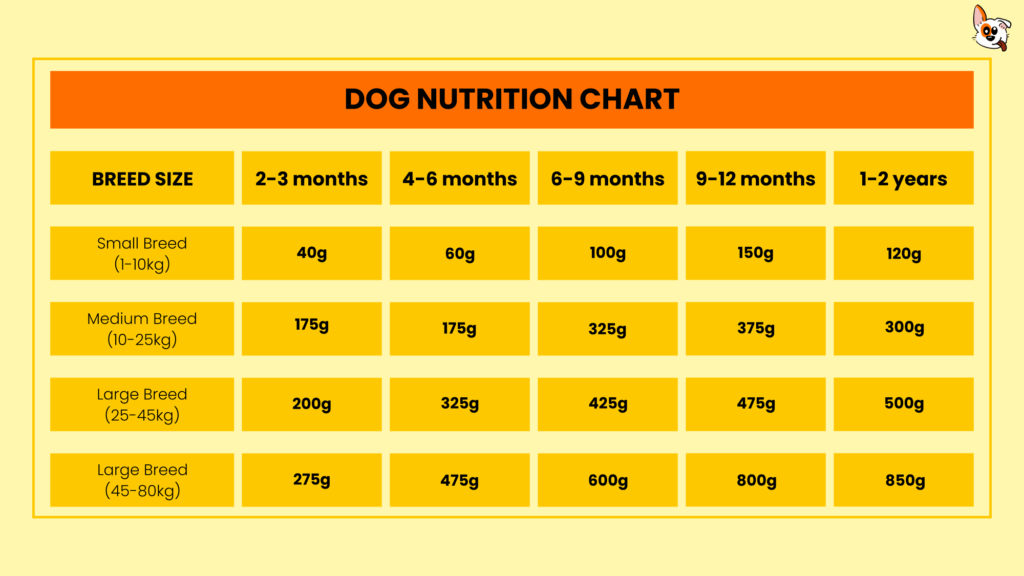
- Adult/Senior Schedule (image3) – indicates nutrient changes & portion control.
- Nutritional Breakdown (image7) – proteins, fats, carbs by life stage.
- Transition Chart – how to move from puppy→adult→senior.
11. Bonus Tips
- Change food gradually over 7–10 days to avoid GI upset .
- Post-meal activity: light walk helps digestion, reduces bloat risk .
- Use feeding toys like KONG for enrichment and slow-eating.
- For hydration: use fountains or wet food if they drink less water Read more….
- Regular vet check-ups and adjust plan based on health status.
🏁 Wrap-up
Our feeding guide gives a holistic view on:
- Proper frequency (4→3→2→1 meals by stage)
- Balanced nutrition (protein 18–32%, fat 10–20%, carbs/fiber)
- Portion & treat management (<10% calories)
- Label literacy / diet choices
- Monitoring & adjusting for life stage, special needs
- SEO techniques to make this article rank well
By following these structured steps, your dog will enjoy optimum health, longevity, and vitality. By following these guidelines, you can keep your dog healthy.
If you require specific breed charts, homemade recipe templates, or life-stage plan—We’re happy to help!