

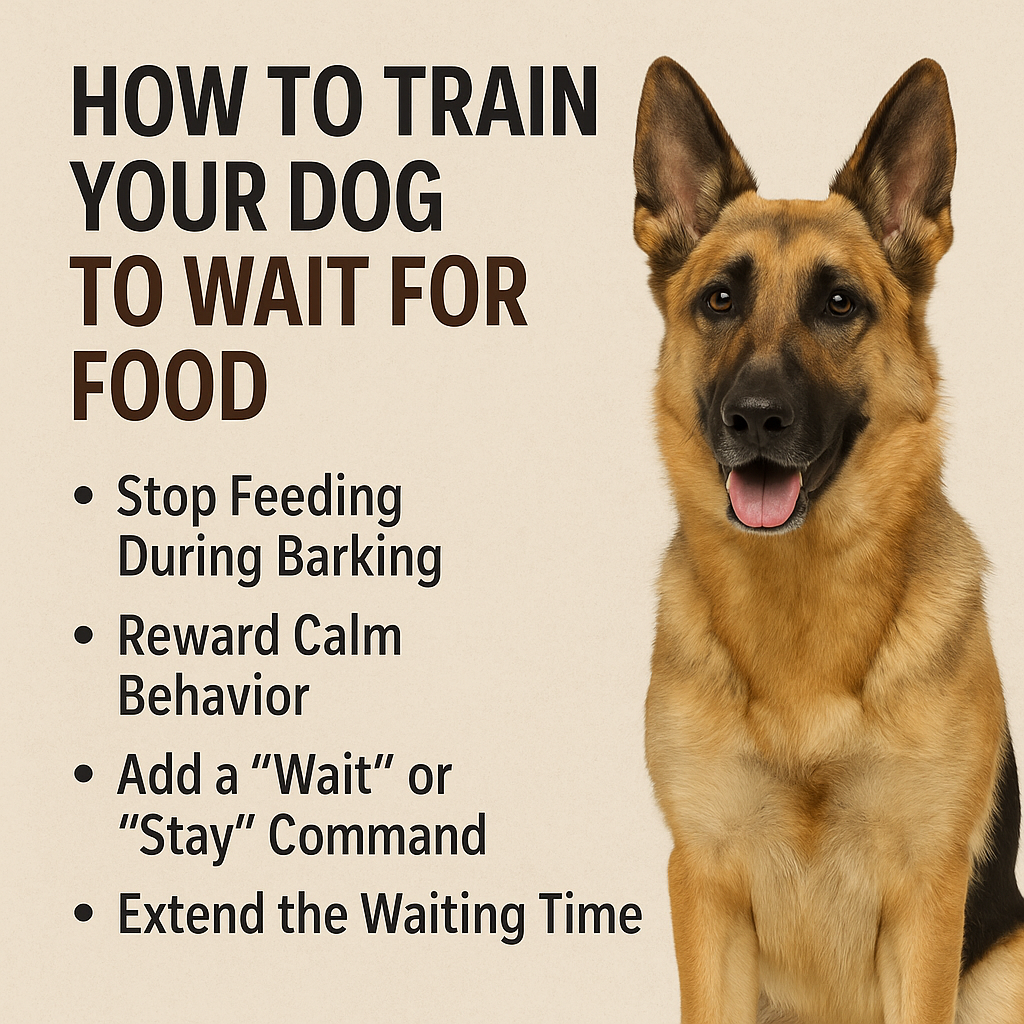
Teaching your dog or puppy to wait calmly for food is an important step in building obedience, reducing overexcitement, and preventing unwanted barking. Many dogs bark, jump, or lunge toward their bowl as soon as it appears, but with consistent training, they can learn patience and self-control in just a few days.
Why Dogs Should Learn to Wait for Food
A dog that rushes to eat without permission may develop bad habits such as:
- Excessive barking at mealtimes
- Poor impulse control
- Food guarding or aggression
- Ignoring basic commands
Training your dog to wait teaches them:
- Self-discipline — remaining calm until released
- Respect for boundaries — listening to your cues before eating
- Better behavior in other situations — the skill transfers to greetings, walks, and social interactions
What You’ll Need for Training
Before starting, prepare the following:
- Your dog’s regular food
- A quiet, distraction-free space
- Patience and consistency
- Calm, assertive energy
Step-by-Step: Teaching a Dog to Wait for Food
Step 1: Stop Feeding During Barking
If your dog barks while you prepare or hold the food:
- Do not place the bowl down.
- Cover or remove the food until they stop barking.
- Wait for even 1–2 seconds of silence before proceeding.
Step 2: Reward Calm Behavior
- The moment your dog is quiet, praise gently.
- Place the food down only when they are calm.
- This teaches that patience equals reward.
Step 3: Use a “Wait” or “Stay” Command
- Ask your dog to sit before placing the bowl down.
- Clearly say “Wait” or “Stay.”
- If they move before being released, lift the bowl and reset.
Step 4: Increase the Waiting Time
- Begin with a short pause before saying “Okay” to release them.
- Gradually extend the wait over several days.
- Your dog should remain still until you give permission.
Expected Progress
With consistency, you may see noticeable improvement in just 2–3 days:
- Barking decreases or stops entirely
- Your dog sits patiently during mealtime prep
- They wait for your command before eating
After a week, most dogs will adopt the habit naturally.
Troubleshooting and Tips
- If your dog breaks the stay: remove the food and try again.
- For highly excitable dogs: keep initial wait times very short and extend gradually.
- Be consistent: mixed signals slow progress.
Final Thoughts
Training your dog to wait for food is simple but highly effective. It improves patience, reduces barking, and builds better communication between you and your pet. Over time, this training also helps in other areas of life—whether meeting new people, ignoring distractions, or walking calmly on a leash.
By following this method daily, you’ll soon have a calmer, more obedient dog who understands that good manners bring good rewards.